

How to Switch Dosimetry Providers Without Compliance Gaps or Disruption




Written by
Gregg Daversa, RT, (R)(CT)(MR)
Director of Healthcare Sales
Last Updated: April 29, 2026
Organizations frequently assume that switching dosimetry providers will be complex, disruptive, or resource-intensive. In reality, modern transition approaches allow organizations to improve program performance while maintaining continuity and minimizing operational impact.
When service challenges arise (such as delayed reporting, administrative inefficiencies, or limited visibility into dose data), many healthcare leaders, Radiation Safety Officers (RSOs), and imaging departments begin exploring alternative dosimetry services. However, the concern is rarely whether a better option exists – it’s whether changing providers will disrupt workflows, burden staff, or introduce compliance risk.
In reality, modern transition approaches have eliminated much of this friction. Today, most organizations can complete their transition to Radiation Detection Company (RDC) in two weeks or less, with no interruption to radiation monitoring or compliance.
Key Takeaways
- Switching dosimetry providers does not have to be complex or disruptive to daily operations
- Many perceived barriers to transitioning (such as data transfer and onboarding) can be fully managed with the right support
- Early evaluation of alternative providers leads to more informed, lower-risk decisions
- Structured onboarding solutions, such as Radiation Detection Company’s SwitchAssist™, significantly reduce transition complexity and internal workload
- Strategic planning enables organizations to improve program performance while maintaining continuity of monitoring and compliance

The Value of Transitioning Without Disruption
Healthcare organizations are already making the decision to transition dosimetry providers when performance, cost, or compliance concerns justify the change.
At Boone Hospital Center, leadership initially hesitated to make a change due to concerns about switching complexity. After transitioning, the organization not only experienced a smooth onboarding process, but also achieved approximately $10,000 in annual savings while eliminating hidden fees and reducing administrative burden.
At the University of Texas Medical Branch (UTMB), declining service quality and unreliable reporting from a prior provider raised serious concerns around dose report accuracy and program integrity.
“We lacked data and information from our previous vendor. I wasn’t able to trust that the reports that we were getting were actually accurate, and that concerned me. That was the last straw.”
– Dr. William Pate, The University of Texas Medical Branch
Associate Vice President for Environmental Health & Safety
Radiation Safety Officer, Laser Safety Officer, & Institutional Safety Officer
After switching to Radiation Detection Company, UTMB reported “night and day” improvements in support, report accuracy, and reliability, allowing their safety team to refocus on higher-value work instead of manual corrections.
Similarly, Valley Presbyterian Hospital improved radiation compliance and operational efficiency through rapid onboarding: the transition was completed in approximately one week, with minimal disruption to daily operations. Valley Presbyterian also gained responsive customer support and more reliable reporting, demonstrating that transitions can be time-efficient and low-risk when properly managed.
These examples demonstrate a consistent pattern: well-managed transitions deliver measurable improvements across operational efficiency, reporting reliability, and compliance.
Understanding Your Current Dosimetry Program Performance
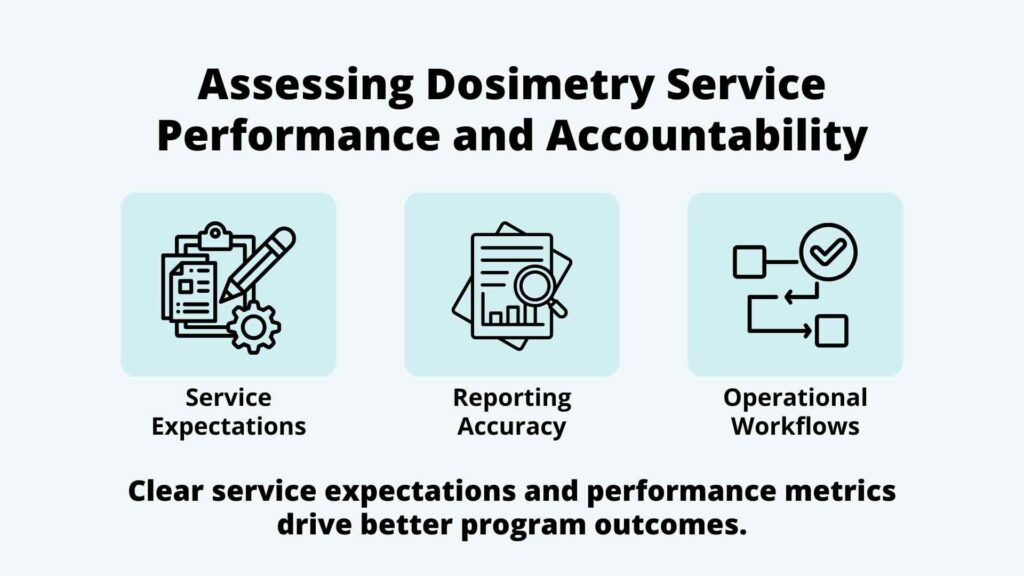
Dosimetry programs are built around service expectations, reporting accuracy, and operational workflows. Over time, these elements can drift out of alignment with an organization’s needs.
A dosimetry contract should establish accountability and service standards; it should not limit an organization’s ability to optimize performance or improve outcomes.
If you’re already thinking about making a change but you're concerned about timing or disruption, it’s worth understanding what a modern transition actually looks like.
With RDC’s SwitchAssist™, organizations can begin preparing for a new dosimetry provider well before their current contract ends. The process is structured to handle data transfer, onboarding, and implementation in advance, allowing you to align your transition with your organization’s operational timeline – not work against it.
Radiation Detection Company ensures your new program starts exactly when your current monitoring cycle ends, so there’s no gap in radiation monitoring or compliance.
From a regulatory standpoint, maintaining continuous monitoring is critical. Requirements from the Nuclear Regulatory Commission (NRC) and state radiation control programs mandate accurate dose tracking, consistent reporting, and proper record retention, including annual exposure summaries such as Form 5 reports. Even a brief lapse in monitoring can introduce compliance risk during audits or inspections and create gaps in an employee’s dose history.
Learn how SwitchAssist™ simplifies switching dosimetry providers →
Actions Organizations Can Take to Improve Their Dosimetry Program
Even in the absence of an immediate provider transition, there are several meaningful steps organizations can take to improve their current dosimetry program.
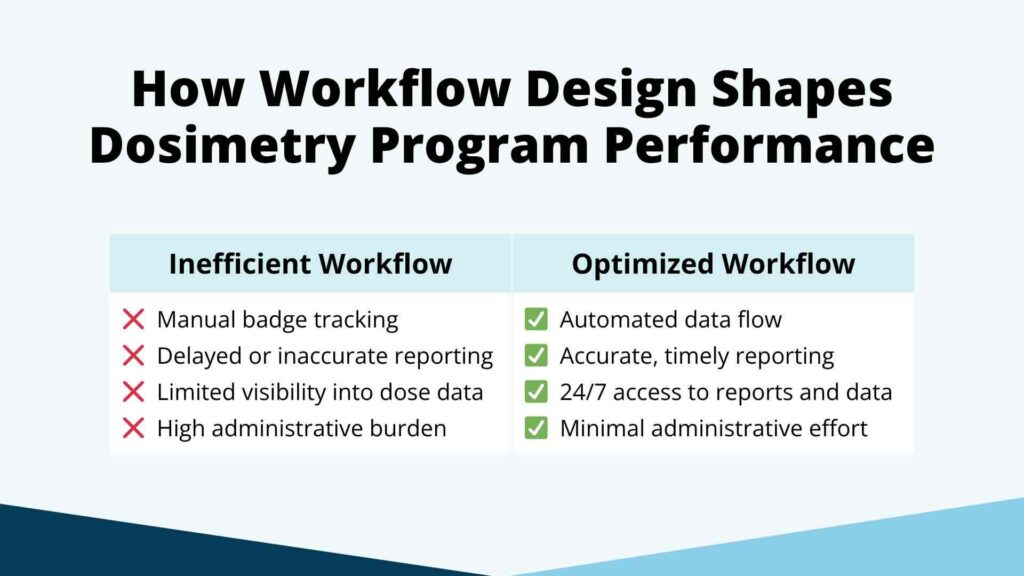
A comprehensive internal assessment is the appropriate starting point. This involves evaluating operational workflows, administrative burden, reporting timelines, and overall program visibility.
In many healthcare environments, inefficiencies are not the result of a single issue, but rather the accumulation of small process gaps over time.
Common areas of concern include:
- Manual badge tracking
- Inconsistent badge distribution processes
- Delays in receiving dose reports
- Limited access to actionable data
Addressing these issues can significantly improve program efficiency and data reliability without requiring a change in provider.
Searching for operational inefficiencies? Use the Radiation Compliance Cheat Sheet to identify potential gaps.
In parallel, organizations should review their existing agreement to identify areas where service expectations may not be fully met. Performance-related provisions, if present, can provide a basis for discussions with the current provider and may lead to incremental improvements.
Struggling with badge adherence? Check out our free guide: Radiation Badge Wearing Tips.
The Importance of Early Evaluation
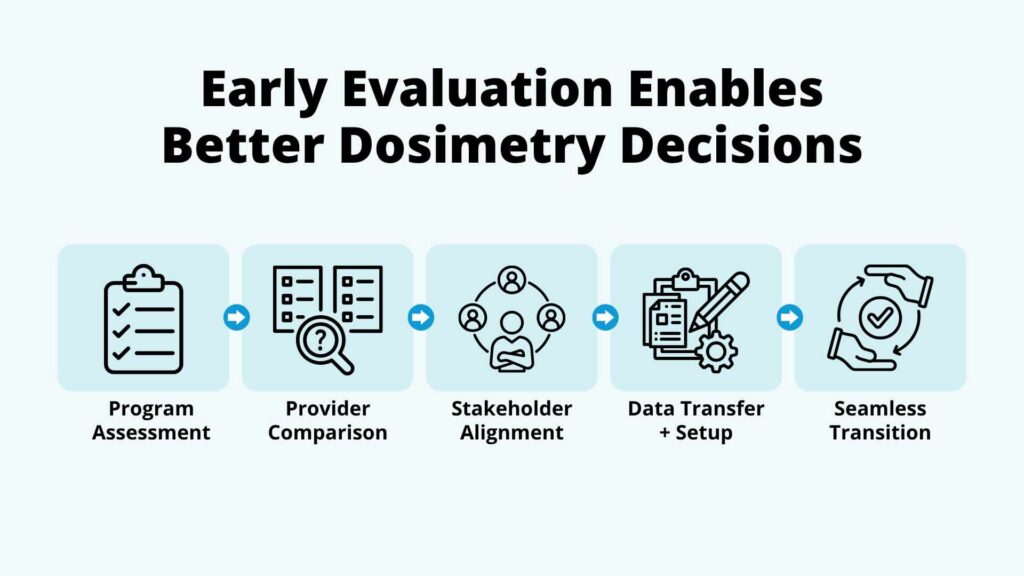
One of the most significant risks associated with dosimetry provider transitions is delayed evaluation. Organizations that wait until the final stages of a contract often face limited time to assess alternatives, align decision-makers, and plan implementation.
Early evaluation mitigates this risk.
By beginning the evaluation process 6-12 months before making a provider transition decision, organizations can clearly define requirements, compare providers effectively, and ensure that any future transition aligns with operational priorities.
If you’re evaluating providers, it’s worth understanding how pricing actually works. Check out our guide on How Dosimetry Badge Pricing Works.
This evaluation should extend beyond pricing to include service reliability, administrative efficiency, reporting capabilities, and overall program support. In many cases, improvements in these areas have a greater impact on organizational performance than cost alone.
These operational inefficiencies – such as manual badge management, delayed reporting, and time spent resolving service issues – often carry a far greater financial impact than badge pricing itself. These indirect costs, while less visible, can significantly affect staff productivity, compliance confidence, and overall program effectiveness.
What to Evaluate in a Dosimetry Provider
When assessing a new dosimetry provider, organizations should focus on a combination of technical, operational, and service-related factors:
- Compliance & Accreditation: Alignment with NRC and state regulatory requirements, with NVLAP accreditation required for legally recognized dose of record reporting; Radiation Detection Company’s laboratory is NVLAP-accredited (Lab Code 100512-0)
- Report Turnaround Time: Speed and reliability of dose reports; RDC delivers reports within 6 business days of receipt of the badges to support timely decision-making and compliance visibility
- Onboarding and Transition Support: Ability to manage data transfer and implementation without creating administrative burden; SwitchAssist™ enables most organizations to transition in two weeks or less with minimal internal effort
- Data Access and Visibility: Ease of accessing dose records, reports, and analytics; RDC provides centralized, user-friendly access through MyRadCare™, our customer reporting platform
- Pricing Transparency: Clear, predictable pricing models without hidden administrative costs or fees; RDC emphasizes straightforward pricing aligned to total program value
Organizations that prioritize these criteria early are better positioned to identify gaps in their current dosimetry service, evaluate total cost of ownership, and determine whether a transition is warranted.
Radiation Detection Company is designed to support each of these criteria – from NVLAP-accredited monitoring (Lab Code 100512-0) and reliable reporting, to structured onboarding through SwitchAssist™, which reduces the operational burden of transitioning providers.
What If There Are Early Termination Fees?
One of the most common concerns organizations have when evaluating a new dosimetry provider is the potential cost of early termination.
While contract exit fees can be a factor, they should be evaluated within the broader context of total program cost.
To better understand how pricing structures impact overall cost, see our guide on How Dosimetry Badge Pricing Works.
Reconsidering the Complexity of Switching Providers
Radiation Detection Company (RDC) developed SwitchAssist™ specifically to eliminate these barriers.
Rather than placing the burden of transition on your internal team, Radiation Detection Company takes on the operational work required to move your program forward.
Most organizations complete their transition to Radiation Detection Company in two weeks or less, allowing them to move forward quickly without disrupting ongoing operations or compliance.
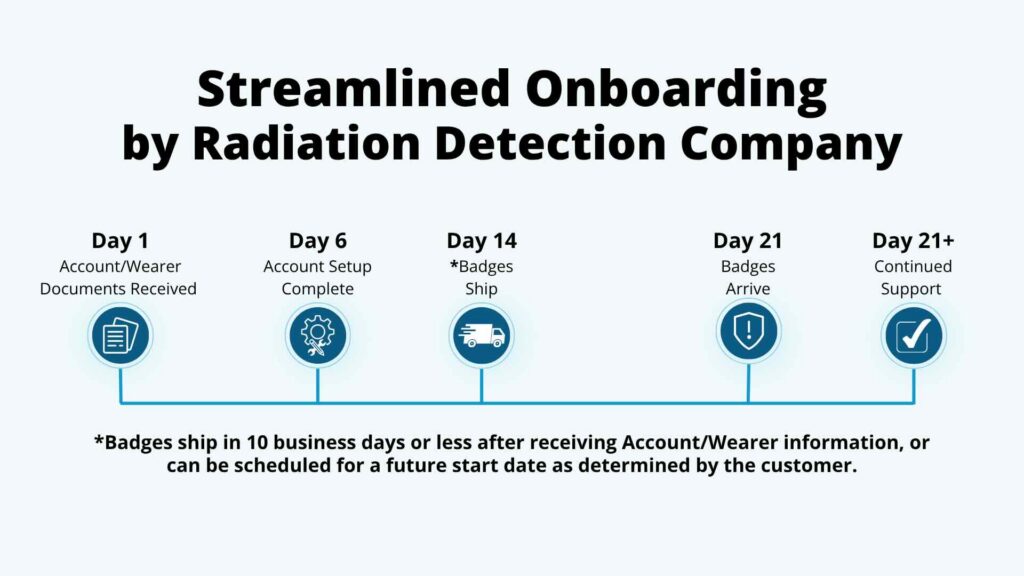
The transition is designed to remove complexity from each stage of the process.
Streamlined Data Transfer
With a 15-minute data transfer, organizations can securely share historical information and dose records while Radiation Detection Company handles roster setup and lifetime dose report integration. This removes one of the most time-intensive aspects of switching providers.
Start on Your Terms
Transition timing is also fully controlled by your organization. With the ability to start on your terms, you can schedule onboarding to preserve your operational timeline – ensuring no overlap and no unnecessary costs before your program officially begins.
This includes aligning your start date with your current provider’s final wear period for uninterrupted monitoring and continuous compliance.
White-Glove Onboarding
Throughout the process, Radiation Detection Company supports busy teams with a dedicated onboarding experience. Through white-glove onboarding, organizations receive direct access to a customer success manager, along with live training and on-demand resources, ensuring a smooth and fully supported implementation.
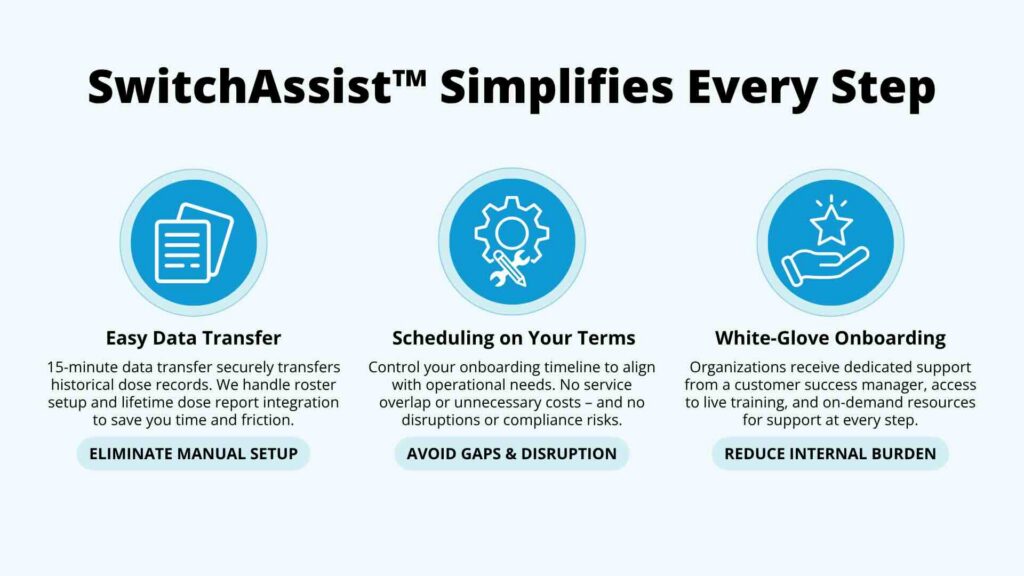
By removing the operational burden, SwitchAssist™ fundamentally changes how organizations approach switching dosimetry providers. What was once considered a complex, high-risk initiative is now a structured, manageable process, designed to fit within the realities of modern healthcare environments.
Switch providers without disruption – see how SwitchAssist™ works →
A Smarter Path Forward for Your Dosimetry Program
Organizations that achieve the most effective outcomes approach provider transitions proactively.
The objective is not simply to change providers but to implement a dosimetry program that aligns with operational needs, compliance requirements, and long-term organizational goals.
By taking a proactive approach, organizations can significantly improve both current program outcomes and future decision-making. This typically includes:
- Conducting a thorough internal assessment to identify operational inefficiencies and performance gaps
- Reviewing contractual expectations to ensure service levels are being met
- Beginning early evaluation of alternative dosimetry providers and solutions
- Aligning internal stakeholders on program needs and future goals
- Developing a transition strategy well in advance of implementing a provider transition
Radiation Detection Company can help you evaluate your current program, identify cost and performance gaps, and determine whether a transition makes financial and operational sense.
Contact our team to review your current dosimetry program →
Ready for a smoother switch? See how SwitchAssist™ works →
Frequently Asked Questions
How long does it take to switch dosimetry providers?
Most organizations complete their transition to Radiation Detection Company in two weeks or less. With SwitchAssist™, the process is structured to minimize internal workload while ensuring continuity of monitoring and compliance.
Are organizations required to wait until contract expiration to make changes?
Not necessarily. While contracts define timing for full transitions, organizations can improve performance, address service issues, and prepare for future changes at any point during the contract term.
When should a new dosimetry provider be evaluated?
Evaluation should ideally begin 6-12 months prior to contract expiration to allow sufficient time for analysis, stakeholder alignment, and transition planning.
Is switching dosimetry providers still operationally disruptive?
Historically, it has been. However, structured onboarding solutions such as SwitchAssist™ have significantly reduced complexity and implementation timelines.
With structured onboarding solutions like SwitchAssist™, most of the operational burden is handled externally, significantly reducing internal workload and implementation risk.
What factors should be prioritized when evaluating a dosimetry service?
Organizations should prioritize reporting accuracy and timeliness, administrative efficiency, data visibility, and overall service support, in addition to cost considerations.
Early termination fees should be evaluated alongside the total cost of your dosimetry program. In many cases, organizations find that operational improvements and cost savings offset these fees over time.
Can meaningful improvements be made without changing providers?
Yes. Internal process optimization and active management of service expectations can lead to measurable improvements even within an existing provider relationship.
Will there be any gap in radiation monitoring if we switch providers?
No. Radiation Detection Company can align your program start date with the final wear period of your current provider, ensuring continuous monitoring with no lapse in compliance.
How much work is required from our team to switch providers?
Minimal. With SwitchAssist™, Radiation Detection Company manages data transfer, onboarding, and implementation, allowing your team to maintain focus on daily operations.
How do you ensure a smooth transition for clinical staff?
For hospitals and healthcare organizations, Radiation Detection Company minimizes disruption by aligning onboarding with existing workflows, maintaining consistent badge processes, and providing hands-on support through a dedicated customer success manager.




 Previous